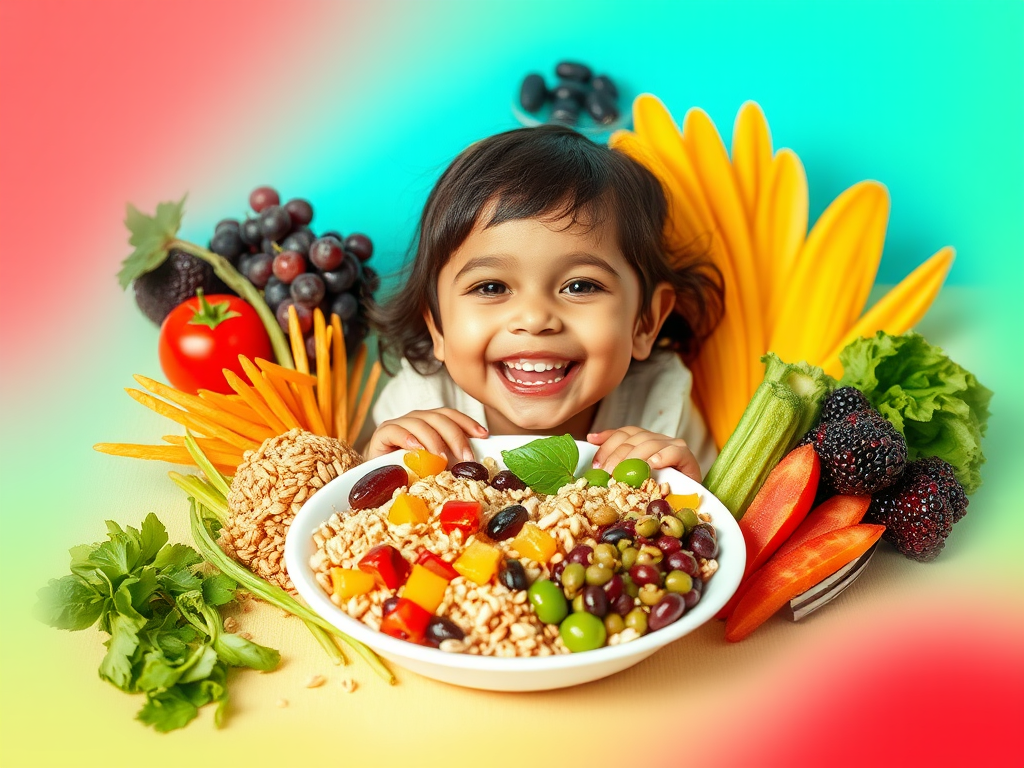
When my daughter, Diya, was about 7 years old, she came home one day from school saying, “Amma, my friend said rice is bad. Should I stop eating it?” I was taken aback—because in our home, rice was a daily staple. That moment reminded me how confusing food myths can be, not just for parents, but even for kids.
Carbohydrates, often labeled as the “bad guys” of nutrition, are actually one of the most essential nutrients for growing children. In fact, according to the American Academy of Pediatrics, carbs should make up about 45–65% of a child’s daily energy intake. The problem isn’t carbs themselves—it’s about the type of carbs children consume.
The Difference Between Good and Bad Carbs
❌ The Not-So-Good Carbs
These are usually refined or processed carbs that give a quick burst of energy but don’t keep children full for long. Examples include:
- Sugary snacks like candies and pastries
- White bread or refined flour products
- Packaged junk food
They often lead to energy crashes, mood swings, and can even impact focus in school.
✅ The Good Carbs
These are complex carbs, rich in fiber, vitamins, and minerals. They release energy slowly, keeping children full and active for longer. Examples include:
- Whole grains (like brown rice, oats, millets)
- Vegetables and fruits
- Legumes and beans
Research published in Nutrients Journal (2021) found that children who consumed more whole grains and high-fiber carbs had better digestion, stable energy levels, and improved concentration compared to those eating refined carbs.
Making Carbs Fun and Interactive for Kids
The trick isn’t removing carbs—it’s teaching children to choose the right ones. Here are some practical activities parents can try:
- The Color Plate Challenge
Ask your daughter to add at least 3 colors of fruits or veggies to her plate. This makes meals look exciting while boosting the “good carb” intake. - Whole Grain Swap Game
Have a fun family challenge where, for a week, you replace one refined item with a whole-grain version—like roti with multigrain roti or white bread with whole wheat. Let your child give a “taste rating” each day. - Lunchbox Detective
Turn label-reading into a mini-game. Ask your daughter to check if her snack has “whole grain” or “refined flour” listed first. This helps her learn the difference while making her feel involved.
Why This Matters for Parents?
Carbs are not the enemy—they’re actually the fuel that powers your child’s growing brain and body. The key lies in balance and quality. Instead of banning rice, bread, or pasta, the focus should be on choosing smarter carb options and pairing them with proteins and healthy fats.
Where Mealhey Steps In
At Mealhey, we understand how overwhelming nutrition myths can be for parents. That’s why every Mealhey lunchbox is designed with science-backed nutrition, balancing good carbs, proteins, and vegetables in the right proportions. Parents don’t need to stress about whether their daughter or son is eating the “wrong” carbs—we’ve already done the hard work of curating meals that are both wholesome and kid-approved.
👉 Give your child balanced energy without the stress. Explore our subscription plans here: https://mealhey.com
 The Mealhey Journal
Leave a comment