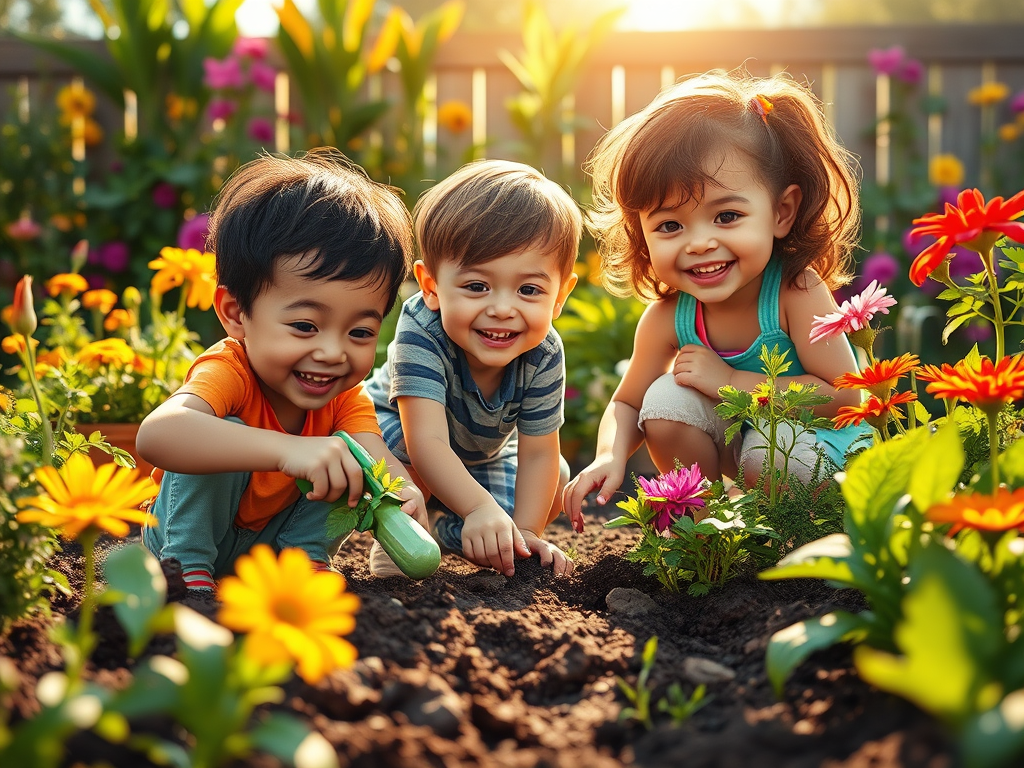
When you think of playtime for kids, you probably picture running, jumping, or building with toys. But one of the most rewarding (and often overlooked) ways for children to play is by getting their hands dirty in the garden. Gardening isn’t just about growing plants—it’s a playful, sensory, and skill-building activity that benefits both the body and mind.
1. Gardening Encourages Active Movement
Gardening keeps kids moving in natural ways—digging, squatting, carrying small pots, watering plants, and even pulling weeds. These actions strengthen muscles, improve coordination, and count as low-impact physical exercise. Unlike structured workouts, gardening feels like fun, so children are more likely to stick with it.
2. A Sensory-Rich Experience
Gardening engages all five senses:
- Touch: Feeling soil, leaves, and petals.
- Sight: Watching plants grow day by day.
- Smell: Fresh herbs, flowers, and even earthy soil.
- Sound: Rustling leaves, buzzing bees, or a watering can splash.
- Taste: Picking a tomato or plucking a leaf of mint to try.
These sensory experiences stimulate curiosity and creativity, turning gardening into an adventure rather than a chore.
3. Connection to Nature and Food
When kids plant seeds and see them grow into vegetables or herbs, they gain a deeper understanding of where food comes from. This connection often leads to healthier food choices—children are more willing to try veggies they’ve helped grow themselves. Gardening builds respect for the environment and teaches responsibility for living things.
4. Learning Through Play
Gardening is full of playful learning moments:
- Counting seeds while planting.
- Observing insects and learning about pollination.
- Tracking plant growth over time.
- Experimenting with sunlight, water, and soil—like little scientists.
All of this happens naturally through play, without kids even realizing they’re building STEM (science, technology, engineering, math) skills.
5. Mental Health & Emotional Benefits
Spending time in the garden reduces stress, boosts mood, and gives kids a sense of accomplishment. Digging in soil and caring for plants can feel therapeutic. Gardening also teaches patience—plants don’t grow overnight—and resilience, since not every seed will sprout.
6. Family Bonding Through Play
Gardening is one of those rare activities that kids, parents, and even grandparents can enjoy together. Assigning small “jobs” like watering plants or harvesting herbs gives kids a sense of ownership, while working as a family makes it a bonding ritual.
Takeaway
Gardening isn’t just about plants—it’s about play, growth, and discovery. When kids garden, they move, learn, and connect with nature in ways that spark joy and curiosity. So next time you’re looking for a playtime activity, grab a watering can, head to the backyard (or even a balcony pot), and let gardening become your child’s new favorite game.
👉 Tip for Parents: If you don’t have an outdoor garden, start with a small indoor herb pot or a balcony planter. Even watching a seed sprout in a jar of cotton can feel like magic for kids!
 The Mealhey Journal
Leave a comment