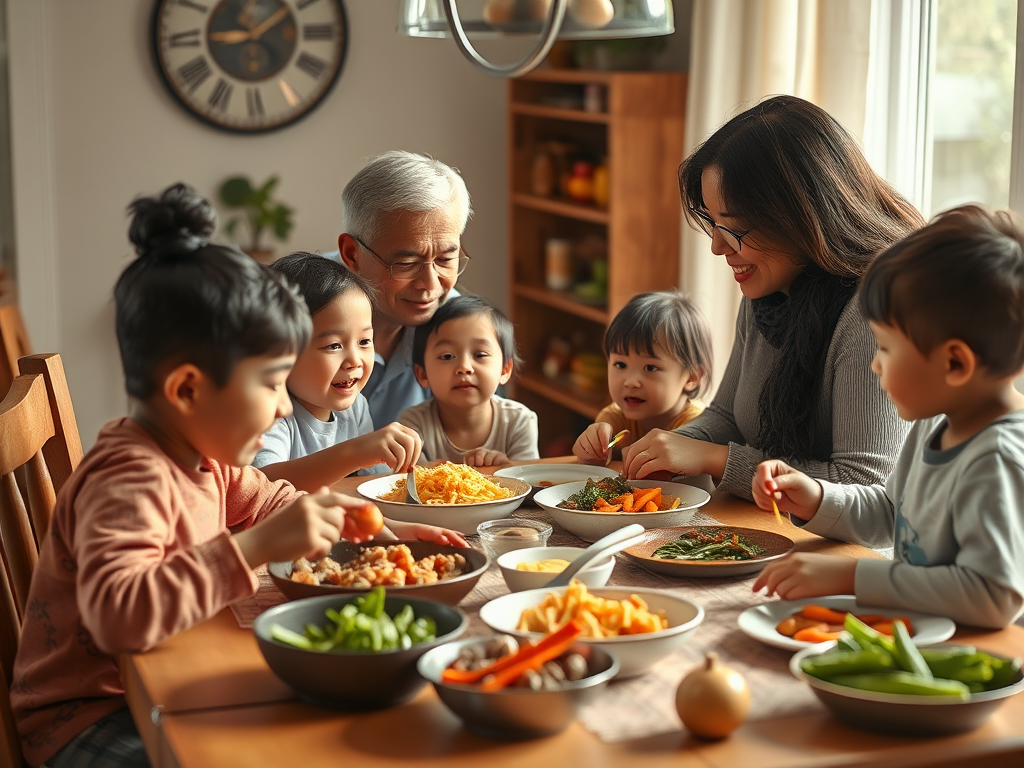
There’s something quietly powerful about sitting down to eat together. For children, shared meals are more than food—they’re social lessons, emotional anchors, and tiny rituals that say, “You belong here.” Making family meals a regular part of life helps kids feel secure, heard, and connected to the people who matter most.
Below is a practical, parent-friendly guide explaining why shared meals matter, what research and real-life experience show, and how to make mealtimes a reliable place for belonging—without turning them into another chore.
The simple truth
When kids eat with others, they learn rules of conversation, empathy, patience, and routine. Meals create predictable moments where children’s needs and voices are acknowledged. That steady rhythm builds a sense of being part of a family unit—and that feeling of belonging supports emotional health, school confidence, and stronger friendships.
What shared meals give children
1. Routine and safety
Regular meals (even small rituals like a “goodnight sandwich” or weekend family brunch) create dependable moments in a child’s day. Predictability reduces anxiety—kids know what to expect and feel more secure.
2. Language and social skills
Talking over food is low-pressure practice for listening, turn-taking, vocabulary, storytelling, and social cues. Children learn to wait, respond, and express themselves.
3. Emotional checking-in
Mealtimes are natural moments for short emotional check-ins: “What was the best part of your day?” These small conversations help kids name feelings and feel seen.
4. Cultural and family identity
Recipes, traditions, and mealtime rituals teach cultural stories and family values—who you are, where you come from, and what matters in your home.
5. Modeling healthy habits
Kids mirror what they see. Sharing a plate of vegetables, a calm tone at the table, or a polite “please” and “thank you” teaches behavior more effectively than lectures.
What the evidence suggests (short & practical)
Research in child development consistently links family meals with better emotional wellbeing, improved academic outcomes, and lower rates of behavioral problems. Even short, regular shared meals—breakfasts or weekend lunches—can make a measurable difference in a child’s feeling of connection and self-worth over time.
Practical ways to make meals moments of belonging
1. Start small and predictable
If daily family dinners feel impossible, pick a reliable slot: a weekday breakfast, a weekend lunch, or “snack & share” after school. Consistency matters more than length.
2. Make it a conversation ritual
Use one simple ritual each meal—e.g., “One Good Thing” (everyone shares one good thing that happened today), or “Question of the Night” (fun prompt: “If you were an animal today, what would you be?”). Short, positive prompts keep kids engaged without pressure.
3. Keep the tone calm and curious
Avoid mealtime lectures or test-like questioning. Model curiosity: “Tell me more about that game you played,” rather than rapid-fire interrogation.
4. Involve kids in small, meaningful roles
Setting a napkin, pouring water, or choosing a table song gives children ownership and helps them feel useful and included.
5. Celebrate traditions—big and small
A Sunday fruit platter, a family toast before a midweek meal, or a special “good homework” clink can become the small rituals that children remember.
6. Use inclusive language
Say “we” when talking about meals: “We’re trying this together.” Avoid singling out a child for criticisms or rewards at the table.
Age-by-age ideas
Toddlers (2–4)
- Keep sharing short and sensory: name colors, textures, and smells at the table.
- Give them easy, safe tasks (press a napkin, drop a fruit into a bowl).
Early school (5–8)
- Introduce the “One Good Thing” ritual and a quick two-sentence round about school.
- Involve them in simple food prep—washing fruit or stirring a small bowl.
Older kids (9+)
- Offer more space for longer stories; ask one good follow-up question.
- Give them responsibility (help plan one meal per week or pick the playlist).
Conversation starters that build belonging
- “What made you smile today?”
- “Tell us one thing you did that felt brave.”
- “Who did you help today—or who helped you?”
- “If we could have a family adventure this weekend, what would you pick?”
Short, specific prompts invite answers—and practice being seen.
Troubleshooting common obstacles
“We’re rushed in the mornings”
Try a 5–10 minute “breakfast huddle” or a nightly “what’s one thing” at bedtime—small moments add up.
“Kids won’t talk at the table”
Start with nonverbal rituals—light a candle, play a short song, or have everyone name a color they saw that day.
“Family mealtimes lead to fights”
Set simple ground rules (no phones at table, one person speaks at a time). If emotions run high, pause and return later.
A short parent story
One parent switched from pressuring a talk-heavy dinner to a quick “one high, one low” round during lunch on Sundays. Within weeks the children started sharing more spontaneously at other times—because the family had built trust through a small, consistent ritual.
Final thought
Belonging is built in small, repeated moments. Mealtimes—brief, predictable, and shared—are a powerful, everyday way to help your child feel rooted and heard.
When lunch is one less thing you have to worry about, you get more headspace for these moments. Mealhey aims to take the stress out of school lunches so families can spend their energy on connection, stories, and the small rituals that truly matter.
👉 If you’d like to simplify your mornings and keep mealtimes for belonging, consider subscribing to Mealhey for balanced, worry-free school lunches: mealhey.com
 The Mealhey Journal
Leave a comment