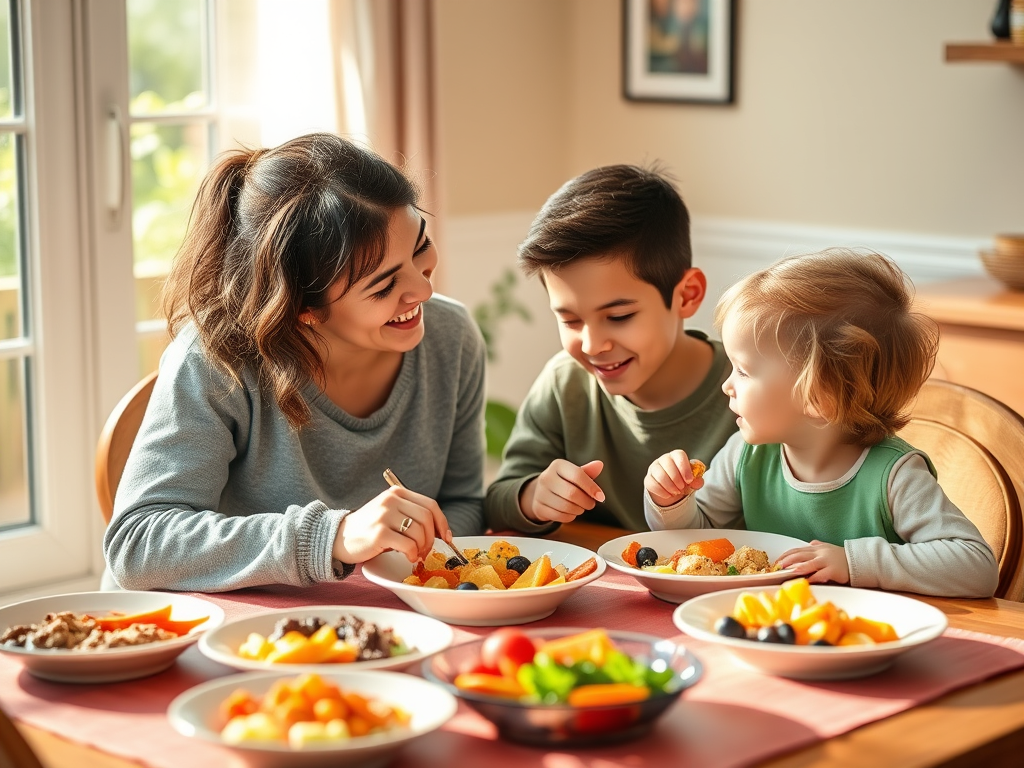
Use mealtime as a gentle bridge from appetite to awareness — no lectures, just conversation.
Kids communicate with food in all kinds of ways: they might refuse a meal when anxious, reach for comfort snacks when sad, or celebrate with sweets when joyful. Rather than treating food and feelings as separate problems, you can use meals and snacks as natural moments to help your child name emotions, practice coping skills, and build emotional vocabulary — all without turning every bite into a lesson.
Below is a practical, parent-friendly guide with simple scripts, activities, and red flags to watch for. It’s written for busy families and keeps things low-pressure and doable.
Why mealtimes are a great place to talk
- Regular and predictable: Meals happen daily, creating many small chances for practice.
- Physically comforting: Food (and the act of eating together) can lower stress and open up conversation.
- Non-threatening context: A chat between bites feels less intense than a sit-down “talk.”
- Teachable moments: Sharing a snack, noticing moods, or winding down after school are natural openings.
A short real-life scene
After school, Riya refused her usual snack and instead clung to her water bottle. Instead of asking “Why won’t you eat?”, her mother asked, “Hey Riya, your hands feel a bit tight — are you feeling squishy-butterfly nervous or stormy-anger?” Naming the feeling (“squishy-butterfly nervous”) made Riya giggle and then say, “I had a maths test.” They ate a small fruit together, and Riya was able to say more about the test. The food helped calm her enough to find words.
Simple rules for these conversations
- Lead with curiosity, not fixing. Ask open questions.
- Keep it short and concrete. Tiny conversations add up.
- Validate before you advise. “That sounds hard” before “Let’s try…”
- Use food as a tool, not the topic. The goal is feeling-talk, not policing intake.
- Be consistent, not perfect. Small, repeated moments beat rare long talks.
Tiny scripts that really work
- “Is your tummy hungry or is your heart a little hungry right now?”
- “I notice you’re poking your food a lot — are you feeling bored, tired, or upset?”
- “Two bites, then tell me one thing that happened at school.”
- “When I feel wobbly, I take three deep breaths. Want to try together and then have a sip?”
- “Hold my hand and point to the face that matches how you feel: happy, sad, angry, or worried?”
Use playful language for younger kids (but don’t be patronizing): “squishy-butterfly nervous,” “firestorm mad,” “cloudy sad.”
Activities to make feelings + food natural and fun
1. The “Taste & Tell”
Offer a new (small) food and ask your child to name a feeling the food makes them think of. Example: sour lime → “surprised,” soft banana → “calm.” This links sensory language to emotions.
2. The “Mood Plate” (after-school, 5–10 minutes)
Divide a small plate into sections: I’m happy, I’m tired, I’m worried, I’m excited. Ask your child to place one small food piece in the section that matches how they feel. Ask one question about the section they chose.
3. Snack Story Circle
While sharing a snack, each person adds one sentence about their day. Example: “I played hopscotch” → “I felt proud when I jumped the farthest.” Keep each turn 10–20 seconds to avoid overwhelm.
4. Feelings Dips
Prepare 3-4 dips (yogurt, chutney, hummus) and name them with feelings (calm, brave, silly). Let kids choose a dip and say why they picked it. Silly names make it light.
5. The “If Food Could Talk” Game
Pick a food on the plate and ask: “If this carrot could talk, what would it say about your day?” Kids love imaginative prompts which lead to real disclosures.
Age-adapted tips
Toddlers (2–4)
- Use pictures and faces to name basic feelings (happy, sad, mad).
- Keep questions very short: “Tummy hungry? Or heart hug?”
- Model simple phrases yourself: “I feel tired. I eat fruit and take a deep breath.”
Early school (5–8)
- Introduce metaphors (butterflies, clouds, fire) to help them label feelings.
- Use the Mood Plate and 1–2 minute “snack check-ins.”
- Praise attempts to share, not just outcomes.
Older kids (9+)
- Ask slightly deeper prompts: “What made this morning hard?” or “What part of the day surprised you?”
- Teach quick coping tools: breathing, counting, naming three things they can see.
- Respect privacy if they choose not to share — invite later.
What to avoid?
- Don’t make food the punishment or the only reward. That links emotions to food.
- Avoid pressuring kids to talk right away. If they’re not ready, offer a low-pressure alternative: drawing, walking, or sitting quietly together.
- Don’t over-question. One open question per snack is enough. Multiple prompts feel like interrogation.
How to respond when kids say they’re upset about food
If a child says, “I don’t want that,” try:
- Acknowledge: “Sounds like that lunch didn’t feel right.”
- Ask a short follow-up: “Was it the taste, the smell, or your tummy?”
- Offer a small option: “Would a little fruit or yogurt help?”
Avoid “eat this or nothing” ultimatums — they escalate stress.
Red flags that need more support
- Food repeatedly becomes the only way a child self-soothes (constant grazing, hiding food).
- Extreme refusal of foods with weight loss or growth concerns.
- Emotional eating that interferes with school or social life.
If these show up, consult your pediatrician or a child psychologist for guidance.
A few research-backed reminders (short)
- Emotional literacy (naming feelings) predicts better self-regulation in children.
- Calm, consistent mealtime routines reduce anxiety and encourage sharing.
(You can reference pediatricians or child development resources for deeper reading when needed.)
Small, practical routines to start tonight
- Snack Check-In: After school, before screens: 5 minutes, snack + one question.
- Two-Bite Rule: Try two small bites, then a feelings sentence. Low pressure, repeated exposure.
- Calm Down Sip: Offer water or warm milk and do three slow breaths together before eating.
How Mealhey supports these parenting moments
At Mealhey we aim to reduce one daily stress: packing lunch. When parents know lunch is balanced and handled, they have more energy to focus on gentle emotional coaching at home — the quick snack check-ins, the Mood Plate, or the “Taste & Tell.” We build lunches mindful of portion and comfort so you can spend your mental energy on the moments that matter: connection, not logistics.
👉 Want one less thing to worry about? Subscribe to Mealhey and keep your mealtimes for meaningful talk.
 The Mealhey Journal
Leave a comment