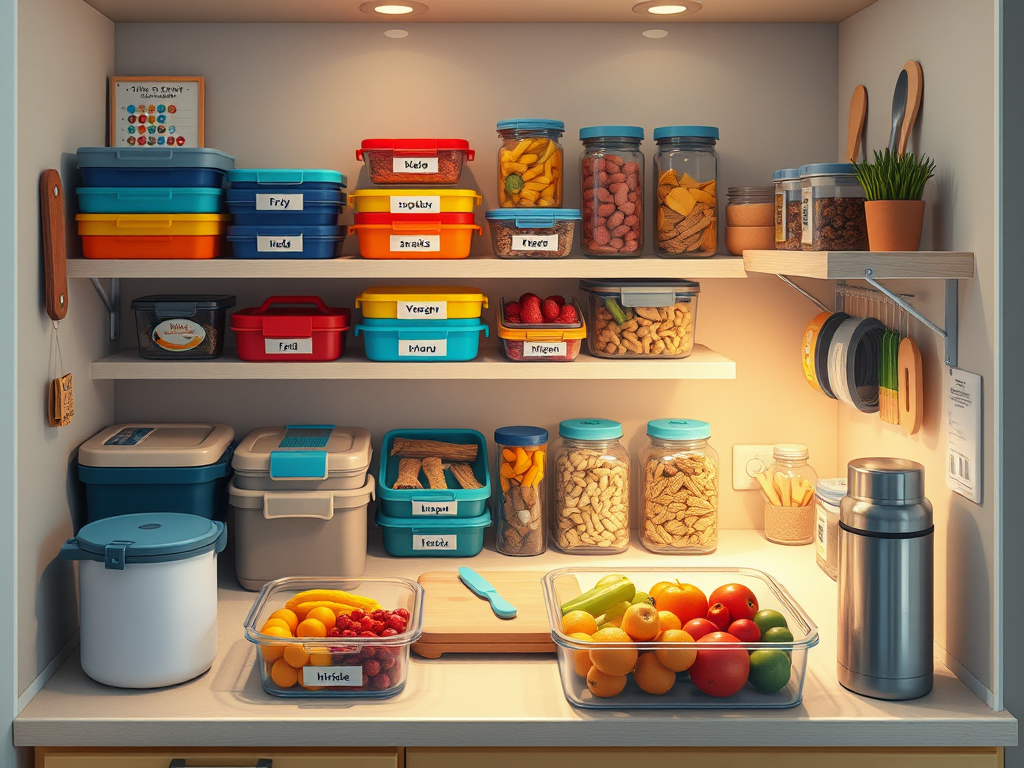
Make mornings calmer, lunches healthier, and kids more independent — all with one small corner of your kitchen.
A dedicated lunch packing station turns last-minute panic into a 3–5 minute routine. It’s a one-stop place where everything needed for school lunch is organized, visible, and kid-friendly. Below is a practical, step-by-step guide you can implement tonight (no renovation required).
Why a Station Works?
- Saves time during busy mornings
- Reduces forgotten items (water bottles, spoons, notes)
- Encourages kids to help — builds ownership and eating habits
- Makes portion control and hygiene easier
1) Pick the Spot (small and smart wins)
Choose a low-traffic counter or a small shelf near the fridge. It should be:
- At adult reach but accessible for the child to add a sticker or note.
- Close to storage (fridge/cabinet) and the sink for quick rinses.
- Well lit so kids can see options clearly.
2) What to Put in the Station — Essentials
Create zones (or boxes) for each purpose. Here’s a practical list:
Storage & prep
- Stackable lunchboxes & lids (1–2 sizes)
- Insulated bag / thermos spot
- Small cutting board and a kid-safe knife
- Mini containers for chutneys/dips
Food & portioning
- Pre-portioned jars of dry snacks (seeds, roasted chana)
- Reusable silicone muffin cups (for single-serve veg/fritters)
- A container of washed cut fruits/veggies (ready-to-go)
Tools & extras
- Spoon, fork, napkin sets (placed in a small cup)
- Ice pack slot (if school bag needs one)
- Small bottle of hand sanitizer or wipes
- Labels & permanent marker for names/dates
- Sticky notes for lunch notes / reminders
Kid-friendly extras
- Sticker sheet or weekly sticker reward chart
- One small “fun” item to include sometimes (doodle, tiny note)
3) Organize the Station (zones you can set up in a box)
If counter space is tight, use a small trolley or crate with three layers:
Top shelf (ready-to-go)
- Fully assembled, sealed lunchboxes (if making ahead)
- Icepack, napkin, cutlery cup
Middle shelf (prep items)
- Washed fruit/veggies, dips, mini containers
- Bread/chapati plate covered with cloth
Bottom shelf (supplies)
- Extras: wipes, labels, spare snack jar, thermos
Label each shelf so kids and helpers know where things go.
4) The 3–Minute Morning Flow (sample routine)
- Heat or assemble hot item (if preparing hot lunch).
- Fill lunchbox compartments: grain → protein → veg/fruit → small treat.
- Seal thermos/insulated bag and place icepack if needed.
- Add cutlery, note, and sticker. Done.
Practice this flow twice with your child — it becomes almost automatic.
5) Weekly Prep That Saves Mornings
Spend 30–45 minutes on Sunday or a weekday evening to:
- Wash and chop fruits/veggies into airtight containers.
- Portion dry snacks into small jars.
- Pre-cook proteins (egg muffins, lentil patties) and freeze or refrigerate.
- Refill labels, stickers, and small containers.
A little weekend prep means zero panic Monday morning.
6) Involve Kids (age-wise ideas)
Toddlers (2–4): choose between two fruit options; place stickers.
Early school (5–8): add one item to the box; practice pouring small portions.
Older kids (9+): pack their own snack jar, label the box, pick the note for the day.
Letting kids help builds appetite and reduces fuss at lunchtime.
7) Food Safety & Hygiene (non-negotiables)
- Keep perishable items refrigerated until packing time.
- Use insulated containers for hot/cold items.
- Use ice packs for foods that must stay cool.
- Wash hands before packing — make sanitizer or wipes part of the station.
- Date leftovers/precooked items and use within 48 hours if refrigerated.
8) Portion & Balance Reminders (quick checklist)
When packing, think:
- Protein (egg, paneer, lentils) — palm-sized portion
- Carbs (rice, roti, sandwiches) — fist-sized portion
- Veggies & fruit — half the box (bright colors win)
- Small treat — one small piece, not the bag
This keeps the lunch filling and reduces mid-afternoon hunger meltdowns.
9) Quick Troubleshooting (real parent hacks)
- Kid refuses veggies? Try dipping sauces or cut shapes.
- Lunch comes back cold? Use a sealed insulated bag or thermos and place it in the school locker if available.
- Running late? Keep one truly grab-and-go box prepped and stacked.
10) Maintenance & Mindset
- Do a 5-minute tidy every evening: wipe counters, refill containers, toss wilted produce.
- Rotate items monthly — fresh labels, fresh stickers, fresh ideas.
- Celebrate small wins (finished veggies, no wasted food) on your sticker chart.
Printable Checklist (What to stock in your Lunch Packing Station)
- Lunchboxes (2 sizes) + lids
- Insulated bag / thermos + ice packs
- Small containers (3–6) & silicone cups
- Cutlery set + napkins
- Washed fruits & chopped veg containers
- Protein batch (eggs/lentil patties)
- Labels, marker, stickers, sticky notes
- Hand wipes/sanitizer
Where Mealhey Helps?
Mealhey’s goal is to make parenting easier. When lunch is one thing you don’t have to plan every morning, you gain time for the fun stuff — teaching your child to pick a sticker, write a note, or set up the lunchbox. If you want to free up more morning minutes without compromising nutrition, subscribe to Mealhey for balanced school lunches prepared with care.

 The Mealhey Journal
Leave a comment