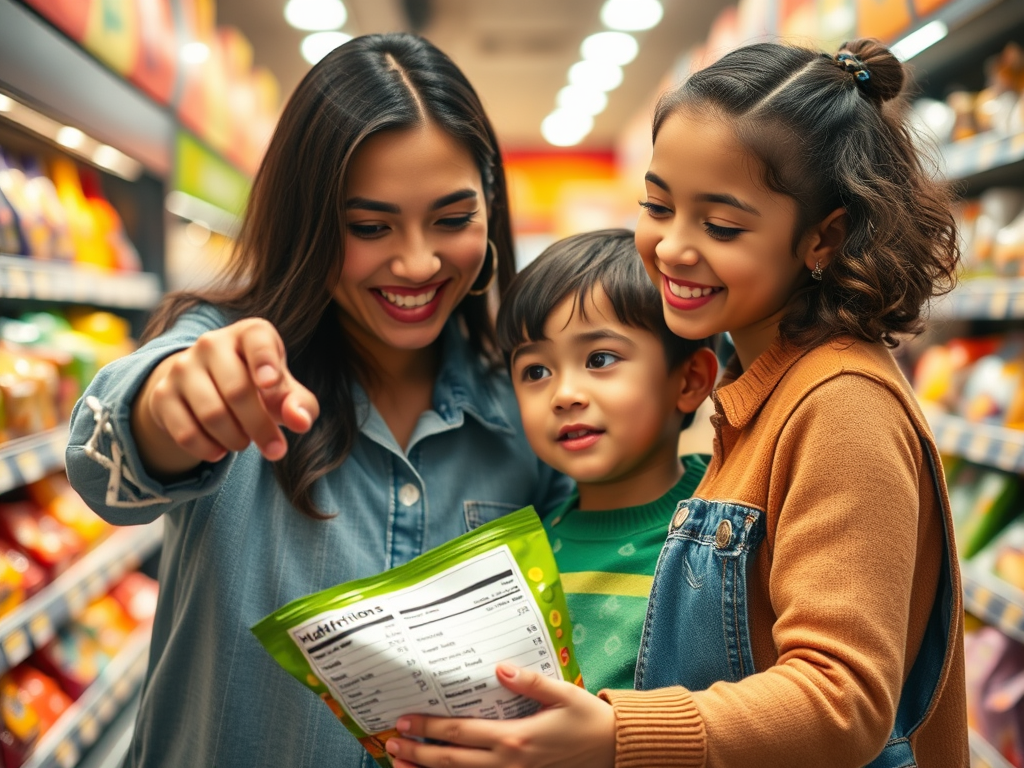
Last month, while shopping for my daughter’s school snacks, I watched her proudly pick up a “fruit drink” with a giant picture of strawberries on the front.
“Look, Mum! It’s healthy — it has fruit!” she beamed.
We flipped it over together and saw sugar listed as the first ingredient. Her face dropped. “So… it’s more sugar than fruit?”
That little moment was a perfect reminder — nutrition labels can be eye-opening.
Teaching your child how to read them isn’t about shaming foods or creating fear.
It’s about giving them a life skill that helps them make better choices — now and when you’re not there to guide them.
Why Read Labels Together?
- It builds awareness without pressure
Children who understand what’s in their food are less swayed by flashy packaging.
📊 Research from the University of Minnesota found that kids exposed to food label education were 27% more likely to choose healthier snacks on their own. - It encourages independence
At school canteens or birthday parties, they’ll have the confidence to make informed choices without you hovering. - It fosters critical thinking
They’ll learn to question marketing claims like “all natural” or “low fat”, and look at the actual numbers instead.
The Kid-Friendly Three-Step Label Check
- Start with Serving Size
Show them that all numbers on the label are based on one serving — and that a pack may contain more than one.
Example: If a snack bar has 8g sugar per serving but there are 2 servings in the pack, that’s 16g total. - Check the Big Three
- Sugar: Too much can cause quick spikes and crashes in energy.
- Salt (Sodium): High levels over time can affect heart health.
- Fiber: More is usually better — it helps digestion and keeps kids feeling full longer.
- Look at the Ingredients List
- Fewer ingredients = usually less processed.
- Ingredients are listed in order of quantity — if sugar or syrup is in the top three, it’s a big part of the food.
Make It Fun: Interactive Activities
Here are some ways to make label reading stick — and not feel like homework:
- Label Hunt Game (Shopping Version)
Give your child two similar products (like two cereal boxes). Ask them to compare sugar, fiber, and salt, then “vote” for the better choice. - Sugar in a Cup
Take the sugar amount from the label (in grams) and measure it into a cup at home. Seeing 4 teaspoons of sugar is much more powerful than hearing the number. - Pantry Detective
Once a week, pick 3 items from your pantry and have your child identify the serving size and the first three ingredients. Keep a “Detective Badge” chart to track their progress. - Restaurant Menu Mission
Many menus now have nutrition info. Let your child “order” the meal they think is healthiest based on the numbers.
Visual Tip
If you’re creating a learning chart at home, try using:
- Green dots for fiber-rich items.
- Yellow dots for foods to enjoy sometimes.
- Red dots for high-sugar/high-salt items.
This simple traffic-light method can make label reading more intuitive for younger kids.
Where Mealhey Fits In?
We know you can’t always be there to read every label with your child — and that’s where Mealhey steps in. Every lunch we create passes the “label test”: balanced nutrition, no hidden sugar bombs, and ingredients you can pronounce.
The Mealhey Journal is here to help you raise healthy, confident eaters with tips you can use today — even if you never order from us. But when you’re ready to skip the daily lunch-packing stress while knowing exactly what’s in your child’s meal, we’re here for you.
📩 Join parents who’ve reclaimed their mornings and taught their kids healthy habits. Subscribe to Mealhey’s lunch plans here.
 The Mealhey Journal
Leave a comment